Category Archives: Craft

The Power of Revealing Details

Posted on
The Giver

Courtesy of bn.com

Correctly placed details can reveal more about a character, setting, or situation than paragraphs of exposition — showing versus telling.  In revision, it’s important for us to scour every scene, every paragraph for ways to show instead of tell.  Sometimes I find that, in the frenetic rush to get the story out, my first drafts tend to be lots of telling and need to be cleaned up pretty dramatically to show more instead.

In Lois Lowry‘s The Giver, Lowry builds a fantatstic new world in barely a chapter, and she’s able to accomplish this feat with her solid use of revealing detail, as in this passage in the first chapter:

Lily considered, and shook her head.  “I don’t know.  They acted like… like…”

“Animals?” Jonas suggested.  He laughed.

“That’s right,” Lily said, laughing too.  “Like animals.”

Neither child knew what the word meant, exactly, but it was often used to describe someone uneducated or clumsy, someone who didn’t fit in.

Without telling us directly how different this society is, Lowry accomplishes this in just a few lines by showing an example of daily life without giving it to us in straight exposition.   The conversation and comment come across casually, almost as an aside, which also shows us something about the world of The Giver and the attitudes of those within it.

Whenever I revise, I try, though not always successfully, to cut as much exposition as I can without losing the thread of the story.  Which revision tricks do you use to clean up your fiction?

P.S.  Check out what the NY Times has to say about Lois Lowry’s new book Son here and how “in many ways, Lowry invented the contemporary young adult dystopian novel.”

What Makes Characters Real?

Posted on
Anne of Green Gables Cover Art

Courtesy of bn.com

Having characters we can relate to — or at least understand — is part of what makes us want to keep reading.  If we don’t care about the main characters and what happens to them, we probably won’t turn that next page.

In my humble opinion, two very distinct things make characters real to the reader:

1.  Quirks

What does your character do that makes her unique?  What makes him stand out above the sea of words and last in your readers’ memories?  Quirks.

I clearly remember how Anne in Anne of Green Gables dyed her hair green because she hated her red hair, and it’s been maybe 15 or 20 years since I read that book.  Anne Shirley, as a character, sticks in my memory because of her quirks.  I still frequently call to mind how she compared herself to her adoptive mother, Marilla, saying that she didn’t want to just walk along in her life (like Marilla); she didn’t mind thudding into the ground every so often if it meant she was able to soar with the eagles for a while in between.  That thought has stuck with me for years because author L.M. Montgomery gave Anne memorable, believable character quirks.

2. Emotional Integrity

Characters’ reactions to situations, however far-fetched those situations may be, must retain emotional integrity in order for readers to stick with the story.  If the character’s parent dies, and the character just keeps on blithely going about his daily life, we must understand why.  Otherwise, you will alienate readers.  It’s one thing to have unsympathetic characters, but quite another to have unsympathetic characters without reasons why.

For example, Scarlett O’Hara works as an unsympathetic character because we want to understand why she’s doing what she’s doing.  However, unsympathetic characters with no reasons behind their actions (at least, no reasons apparent to the reader) will lose the reader.  I was recently reading the third book in a triology where the main character had been fairly well established, and all of a sudden, he does something crazy that is never fully explained for the entire book.  I finished the book since I was comparing notes on the book with someone else who was reading it, but I made the decision never to read any other book by that author again.  I felt cheated.

On the other hand, you can find a book with an incredible premise that wouldn’t generally happen in daily life, like Margaret Atwood‘s The Handmaid’s Tale, and it comes across as believable because the characters act in ways that make sense for their situation.  When the main character (whose real name we never learn) in The Handmaid’s Tale savors every detail in her room because she can’t visit many places in the outside world, it feels very real for her situation.  When she’s afraid of being discovered for her dissension, it feels very true to her character.

What makes a character feel real to you?

Finding Character Motives

Posted on

We’ve all heard what a motivation is, but how do we find our character’s motive?

Characters and their motives focus a story.  What is a character fighting for or against?  Although not true in all cases, most stories can be stripped down to be rooted in love (fighting for) or fear (fighting against).

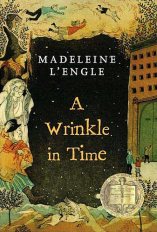
A Wrinkle in Time

Courtesy of Amazon.com

In Madeleine L’Engle’s A Wrinkle in Time, Meg is fighting to find her father and bring him home — a motive based in love, her love for her father and her family.  Though quite a few twists hop in front of this motive, her desire to bring her father home and reunite her family gets the story going.

In Margaret Mitchell’s Gone with the Wind, though the love story has gotten the headlines (and really, who doesn’t love Rhett Butler?), Scarlett’s primary motive is survival — surviving the war, surviving General Sherman’s fire, surviving the way her family’s land has been ravaged, surviving heartbreak. She is fighting against humiliation, starvation, and death — a motive based in fear, at least at first.

Love and fear need not be narrowly defined by familial or romantic love or fear of death or physical pain; they can be more basic, like love of a home or love of honor, fear of shame or humiliation.  What other books stick out immediately as being rooted in love or fear?

P.S.  Check out the graphic novel version of A Wrinkle in Time (adapted by Hope Larson) here.

Can Good Writing Be Taught?

Posted on

What makes good writing good?  And can it be taught?

This topic is not new, but the recent Atlantic article The Writing Revolution reignited the debate (see here and here for more).  It certainly made the circuit among all my teaching friends.  The article follows the story of one underperforming school in New York that decided to pursue good writing with a passion, following the idea that structured writing, where students are taught tangible rules and how to apply them, leads to better comprehension of all subjects.  And so far, it seems to be working.

The school believed that the primary issue stemmed from students not understanding basic sentence structure and how to vary sentence structure, and they built from there.  If you think about it much, it’s not very revolutionary at all; it’s just focusing on fundamentals.  Varying sentence structure is a solid, basic rule of writing that is virtually invisible when it’s done well.

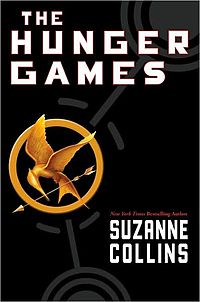
ImageBut let’s compare 2 paragraphs.  This first paragraph is the first few lines of Suzanne Collins’ The Hunger Games:
When I wake up, the other side of the bed is cold.  My fingers stretch out, seeking Prim’s warmth but finding only the rough canvas cover of the mattress.  She must have had bad dreams and climbed in with our mother.  Of course, she did.  This is the day of the reaping.

Collins pulls us along and controls the pacing with her masterful use of varied sentence structure.  Longer. complex sentences tend to draw us out or be more contemplative; shorter, more to-the-point sentences give more punch.  Without the sentence complexity, it might sound a bit like this:

I wake up.  The other side of the bed is cold.  My fingers stretch out.  I’m seeking Prim’s warmth.  I find only the rough canvas cover of the mattress.  She must have had bad dreams.  She must have climbed in with our mother.  Of course, she did.  This is the day of the reaping.
Without something so simple as varied sentence structure, the paragraph sounds stilted and immature (although that is another way to play with the character’s voice).  What other writing concepts are invisible when done well, but glaringly obvious when they’re missing?