What Makes Love Triangles So Compelling?

Posted on
Love Triangles - Dante's Inferno - Novel Conclusions - writing blog

Gianciotto Discovers Paolo and Francesca (Dante’s Inferno) – via Wikimedia Commons

I’ve been pretty absent from the blogosphere recently as I’ve been down for the count with that cold/flu thing that’s been going around.  If you get it, hit that Vitamin C, stat!  Anyhow, in honor of the upcoming Valentine’s Day, we’re going to chat about some famous love triangles in literature.  What makes them so compelling?  And why do they seem to be in every other story?

If you take a little tour through past and current popular fiction, love triangles abound like wizards at Hogwarts.  Before all the tween girls this side of Friday were oohing and aahing over Jacob, Bella, and Edward (Go Team Jacob!  Yes, I confess I did read the books…), some pretty justifiably famous love triangles reigned in literature, with a few things in common.

Who can forget Darcy, Elizabeth, and Wickham?  In Pride and Prejudice, while we’re on Elizabeth’s side the whole time, we watch Darcy and Wickham alternately lose and win her favor.  In Gone with the Wind, we’re pulling for Rhett the whole time as Scarlett pines after a guy named Ashley (Scarlett, honey, you should’ve known he wasn’t the one as soon as you heard his girly name.  Sigh.).  Edith Wharton’s The Age of Innocence gives us a heart-wrenching love triangle with a much sadder ending.  When Newland falls in love with his fiancée May’s married, scandalous cousin Ellen in the 1870s, bad times ensue.  You can go further back to Shakespeare’s Twelfth Night and even the Arthurian legends of Guinevere and Lancelot falling in love behind Arthur’s back.

We could go on and on here, but what makes these love triangles work?  These love triangles compel us to turn page after page because the emotions feel real and immediate.  It doesn’t hurt that love triangles naturally create tension, an essential ingredient for plot.  When love triangles are done well, when the author upholds the emotional integrity of the story, we as readers can’t put the book down.

Elizabeth Bennet’s original hatred of Darcy and her infatuation with Wickham were as real to us as later her slowly dawning love for Darcy and her disgust for Wickham feel real.  We live through these events as Elizabeth does because Austen upholds the emotional integrity of the story.  She doesn’t step outside the fourth wall to preach at us or to tell us what Elizabeth or Darcy or any of the characters ought to think.  She lets the characters lead the story, rather than letting the story lead the characters.  And it doesn’t hurt that Darcy is pretty hot and pretty rich…

Which love triangles do you love?  Which love triangles stand out to you in fiction?

The Booker Award & the Versatile Blogger Award

Posted on

the-booker-award novel conclusions writing blogHey y’all, it’s award time!

The lyrically lovely writer Asha Seth over at Amidst Books presented me with the Booker Award last month.  Asha has a beautiful writing style; definitely stop by her site and say hello.  I am so honored that she thought my blog worthy of this award!  I have been putting off accepting the Booker Award on this blog because it asks me to choose my top 5 favorite books, which is excruciatingly like choosing a favorite child.  But I decided to bite the bullet and do it.  The rules for the Booker Award:

The Booker Award is for book and literary blogs that are at least 50% about books, reading, etc.  On being awarded with the Booker Award, you must share:

  • Your top five favorite books.  Mine are:
  1. Pride and Prejudice by Jane Austen
  2. The whole Harry Potter series by JK Rowling
  3. The Handmaid’s Tale by Margaret Atwood
  4. A Wrinkle in Time by Madeleine L’Engle
  5. The Time Traveler’s Wife by Audrey Niffenegger
  • Your most favorite author (and why).  My favorite author is JK Rowling.  Her tight plotting is masterfully done, and I love her amazing characterization and world-building ability.
  • Your favorite genres.  I read everything, but lately I’ve been reading lots of YA fiction (it’s like market research for my writing…).
  • Give this award to 5 or more bloggers (see below) and let them know with a comment.
  • Show this award off on your site and link back to whoever gave it to you.

I’m awarding the Booker Award to these fantastic literary blogs  (should they choose to accept) :

versatile_blogger novel conclusions writing blogThe amazingly warm and friendly writer Pish Nguyen over at Blog of Loveliness has awarded me the Versatile Blogger Award.  Yay!!!  Definitely drop by Pish’s awesome blog and say hello.  The rules for the Versatile Blogger Award are as follows:

  • Display the award certificate on your website
  • Announce your win with a post and link to whoever presented your award
  • Present 15 awards to deserving bloggers
  • Drop them a comment to tip them off after you’ve linked them in the post
  • Post 7 interesting things about yourself (see below)

I’m awarding the Versatile Blogger Award to these deserving blogs below (should they choose to accept).  I’m breaking the rules and only choosing 6:

I am ending with 7 things about me for the Versatile Blogger Award:

  1. My favorite color is burgundy, but I don’t like the color red.
  2. I have a twin brother.  It still amazes me how often people will ask, “Are you identical?”  Well, I’m a girl, and he’s a boy; what do you think?  Goodness.
  3. When I was little, I had a Southern accent (I was born in the South, after all).  There are home videos to prove this.  Sometime after we moved to Florida when I was a kid, the accent ran away, but I can still pull it out of my back pocket whenever I want.
  4. I worked at an overnight Girl Scout camp every summer for 10 summers starting when I was a teenager, including a few summers as assistant director, plus a week here and there for a couple summers beyond that.  Leaving teaching put a dent in my ability to work at camp.
  5. As hinted at in #4, I am a HUGE advocate of technology-free summer overnight camps.  Not only are they cheaper than camps that have air conditioning, they teach your child independence.  No matter what a kid grows up to be, she will need confidence and people skills, two things camp builds in abundance.
  6. I love Bananagrams.  So fun.
  7. Linguistics fascinate me.  I have hinted to my man that an OED might be a good gift someday.  This is perhaps a holdover from my days as an English teacher/copy editor/Creative Writing major.

Happy Friday, all!

What Makes Cross-Genre Fiction Work?

Posted on
The Alchemist - Novel Conclusions - writing blog

The Alchemist by Paulo Coelho, via Google Images

We’ve all read a little cross-genre fiction, whether we called it that or not.  Cross-genre fiction, if you haven’t heard that term before, is fiction that mixes two different genres, or types, of writing, such as historical fiction and fantasy, or romance and supernatural fiction, or aliens and cowboys — well, you get the idea.

Lots of cross-genre fiction is pretty horrifically bad (if you’ve ever read online fanfiction or perhaps visited webook.com or Authonomy, you’ve certainly come across some of this; if not, count yourself lucky).  It’s also a lot harder to market, so it can be much harder to publish.  Consequently, less of it gets published by the big publishers, and less of it enters the public imagination than other genres.

However, cross-genre fiction has the potential to accomplish some phenomenal things by approaching the same archetypal stories in a new way.  And I would posit that, when cross-genre fiction succeeds, it does so for 2 reasons:

  1. We care about the characters.
  2. The story is tightly plotted.

Although these two things are important in all types of fiction, they are ever so much more important in cross-genre fiction because readers judge it much more closely than plain old contemporary fiction.

A beautiful example of cross-genre fiction is Paulo Coelho’s allegorical The Alchemist (<– affiliate link that helps keep this blog awesome).  Whether you like his writing or not, you have to admit that Coelho writes in a way that is gorgeous and simple at the same time — not an easy task.  This book reads like historical fiction with brief supernatural elements, and it manages to still be clean and smooth.

Not only do we as readers care about what happens to main character Santiago, every moment in this book has a purpose.  Coelho either did an amazing job editing this book many times over, or he had outlined everything scene-by-scene before putting pen to paper.

What cross-genre books do you love?  What do you think makes them succeed?

P.S. Check out a cross-genre novel written by a fellow blogger here, called The Seneca Scourge.  It’s on my to-be-read list for 2013. 🙂

Book Forests, Commandments, and Voracious Readers

Posted on

This past week, I’ve run across a few pretty cool things, and I wanted to let you all in on these catches:

Have you heard about the ridiculously awesome Book Forest book swap in Berlin?  The Book Forest combines two of my favorite things — books and nature! 🙂  It’s a book swap set up by BauFachFrau Berlin that is arranged to look like actual trees clustered together.  Each tree has a few cut-outs that function as shelves.  Apparently, it was originally supposed to be a temporary installation, but the community loved it so much that they couldn’t part with it.

Check out bookriot.com’s The Ten Commandments of a Righteous Readerly Life.  Number one is my favorite, but I won’t list it here, or I would be breaking Commandment #10, “Thou shalt not spoil.”

Goodreads is up to 20 million reviews.  The community of voracious readers is expanding rapidly!  Check out the original post on the Goodreads blog here.

goodreads 2012 infographic - novel conclusions - writing blog

goodreads 2012 infographic

Libba Bray’s Gorgeous Characterization

Posted on
Libba Bray - Novel Conclusions - writing blog

Libba Bray’s A Great and Terrible Beauty

How is it that Libba Bray makes her characters so achingly real?  I’ve talked a bit about character motives and character quirks in the past, and there are always more avenues to explore in characterization.

I’ve recently been reading Libba Bray’s Gemma Doyle trilogy, which begins with A Great and Terrible Beauty.  The cover, a young girl in a corset, threw me off when I first saw it, as it looks like some silly romance; however, I had heard some great things about Libba Bray and was intrigued by the book blurb.  Generally, I can read the first couple paragraphs of a book and decide if I want to buy it; A Great and Terrible Beauty passed this test and pulled me right into the mystery.

The character Felicity gives us a wonderful example of Bray’s ability to create realistic, dynamic characters.  Felicity, first introduced as a bit of an antagonist, grows into one of the most complex characters in the trilogy.  This is hinted at when she jumps dramatically onto the page:

Her white-blond hair is arranged neatly in a bun, as young ladies must wear their hair, but even so, it seems a bit wild, as if the pins won’t really hold it.  Arched eyebrows frame small, gray eyes in a face so pale it’s almost the color of an opal.  She’s amused at something, and she tosses her head back and laughs heartily, without trying to stifle it.  Even though the dark-haired girl is perfect and lovely, it’s the blond who gets the attention of everyone in the room.  She’s clearly the leader.

What did Bray do here that characterizes Felicity?

  • Shows the character in action
  • Points out telling details of her appearance
  • Shows the way others react to her

In just a paragraph, and without stopping the scene to describe the character, Bray creates a dynamic, fluid picture in our minds.  One of the most important things here is showing the way others react to a character, something often overlooked.

What other strong characters stand out to you?  What makes those characters stand out?

Related Posts:

The 10 Most Read Books in the World

Posted on

This post contains affiliate links that help this blog continue to be awesome.

Happy 2013!!!  Today is the first day of Lucky 13.  Are you excited?  I can’t hardly wait!

I thought this would be a good time to start out the new year with a super fun infographic from Business Insider, The Top Ten Most Read Books in the World:

Most Read Books - Novel Conclusions - writing blog

Top 10 Most Read Books Infographic, via Business Insider

I’ve read at least part of every book on this list except for Mao’s little red book (and I think it’s fairly safe to assume I can continue on just fine without reading that little Communism handbook).  2 things struck me about this list:

1.  These books are dramatically different.  This is great as it means that there’s lots of room at the top!  As a reading public, we aren’t stuck inside any one genre — we read lots of different things.

2.  Some of these books are relatively recent, which means that this list is ever-changing.  In a few years, your book could be on the list!

Have you read any of these “most read” books?  Which were your favorites?

P.S. Speaking of the new year, there’s a great new year’s resolutions post over at bottledworder.

Falling in Love with Writing

Posted on
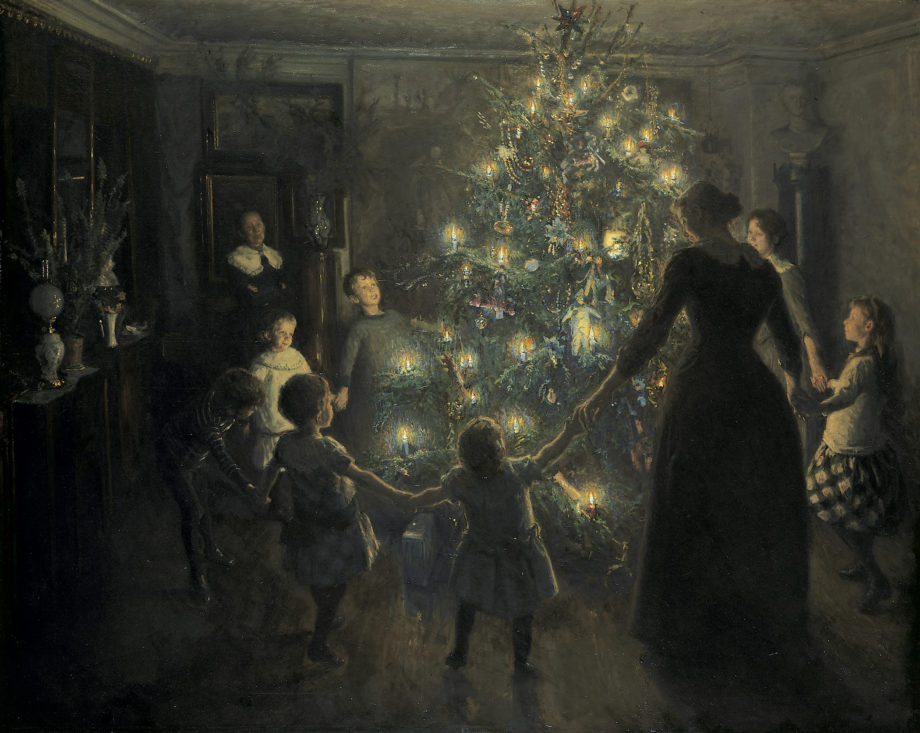
Glade Jul - Happy Christmas - Novel Conclusions - writing blog

Glade Jul. Viggo Johansen. Courtesy of Wikimedia Commons.

First of all, a very Merry Christmas to everyone!  I love the holiday season and getting to be with family from all over the country, even if just for a little while.  This is also part of the reason I haven’t been actively blogging as much this month — the holiday prep monster has been greedily eating my time in huge chunks.  I need to work on getting as organized as my amazing friend Casey, who has three adorable young kids and an awesome craft business and still blogs constantly.

Anyhow, in all the Christmas madness this morning, my mother gave me a fun writing book.  I picked it up after all my little cousins had gone down for naps or to attack each other with Nerf guns, and it opens with the author reminiscing on his love affair with books.  This made me think of my own fall into writing as a kid — because it truly was a fall, with no hope of coming back.

As a little kid, I LOVED books, and around age 5 or 6, started writing all the time, though not quite as much as I was reading.  However, this writing was more like little drawings of characters and a paragraph about them.  In second grade, I graduated to writing a “book” on that big paper that kids learn to write on.  It talked mostly about my class and how we wanted to go on a field trip.  Plot was a bit thin on the ground, I’m afraid.  I was able to include every kid in my class in the story, though, which was quite a popularity bump.  In fifth grade, we had to write a story with our vocabulary words every week, and each week, I wrote a brief story about sisters Julie and Natalie, who managed to get into some pretty crazy adventures.

What has always drawn me into writing (and into reading, for that matter) is finding out the stories of interesting characters.  Interesting characters fascinate me even now.  What drew you into writing?  What keeps you going now?

The Evocative Sense of Smell

Posted on
The Lightning Thief - Novel Conclusions - writing blog

Courtesy of bn.com

Writers frequently overlook the sense of smell to focus primarily on sight.  Smell, however, packs a much tighter emotional punch; our sense of smell is associated very closely with the part of the brain that processes emotion.  Aroma, fragrance, odor — whatever you’d like to call it — can frequently unlock memories and associations for both your characters and your readers, if used with finesse.

Where some authors skip over the most emotional of our five senses, some use it to great effect.  Vastly different writing styles can use the sense of smell to set the stage, reveal character, or move the plot forward.  Within the first few paragraphs of The Handmaid’s Tale, Margaret Atwood incorporates scent to set the scene in an old, empty gymnasium:

A balcony ran around the room, for the spectators, and I thought I could smell, faintly like an afterimage, the pungent scent of sweat, shot through with the sweet taint of chewing gum and perfume from the watching girls.

Atwood creates a feeling and uses this feeling to build curiosity.  Where exactly is the narrator, and why is she here?  We as readers want to know why we are here and where we are going, and in creating that curiosity, Atwood achieves an enviable goal.

Another example of scent working for a story comes up in a completely different book — but also a book that I love — The Lightning Thief by Rick Riordan.  Riordan uses scent to build the character of Percy’s step-father, Gabe:

I slammed the door to my room, which really wasn’t my room.  During school months, it was Gabe’s “study.”  He didn’t study anything in there except old car magazines, but he loved shoving my stuff in the closet, leaving his muddy boots on my windowsill, and doing his best to make the place smell like his nasty cologne and cigars and stale beer.

I dropped my suitcase on the bed.  Home sweet home.

Gabe’s smell was almost worse than the nightmares about Mrs. Dodds, or the sound of that old fruit lady’s shears snipping the yarn.

Riordan gives us a feel for Gabe’s character and tells us something that will be very important to the plot later (though I won’t spoil it for you by revealing that bit).  Gabe acts as a foil to Percy and his mother, Sally, showing us more about Percy and Sally purely through their reactions to him and interactions with him.

However, in order to use scent efficiently, we can’t just toss on a few extra olfactory descriptors.  The use of scent needs to pull its weight within the story.  Does your use of scent in your writing pull its weight?  Does it reveal character, plot, or important background information?  Does it create curiosity or build an important feeling?  If it doesn’t do these things, maybe it doesn’t belong there.

Have you read anything where the sense of smell stands out or plays an important role?  Which scents bring back memories for you?

P.S.  Check out a fun interview of Rick Riordan from Saturday’s Guardian here.

Dreaming of Endless Books

Posted on
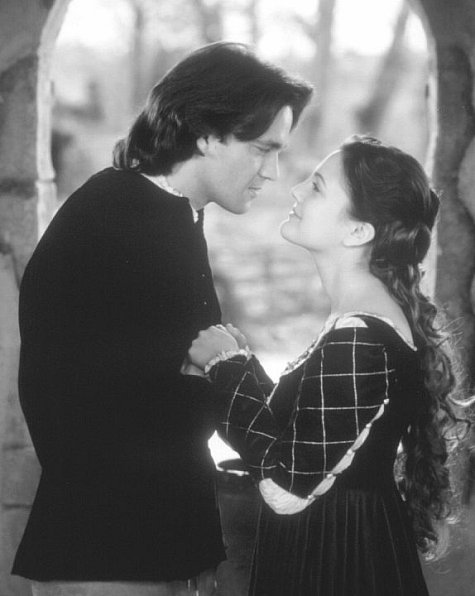
Ever after library - Novel Conclusions - writing blog

Ever after. Imagine the library down the hall. Courtesy of Google Images.

Earlier today, I was chatting with my better half, Beau, and I mentioned how I would love to have a library in our future house (which does not exist yet).  He didn’t quite see eye to eye with me on this one:

ME:  Can we have a library in our house someday?

BEAU:  We already have a library.

ME:  What are you talking about?

BEAU:  If a library is a room full of books, Library #1 is our living room.  Library #2, the bedroom.  Library #3, the office.

ME:  (dreamily) It would be all tall, gorgeous shelves full of books with comfy overstuffed chairs.

BEAU:  And maybe the bathroom is Library #4.

ME:  Hmph.  Not what I meant, punk.

This got me thinking about beautiful libraries.  I love libraries, and beautiful libraries are even better.  The first one that popped into my my is the gorgeous library at the monastery in the movie Ever After.  I can’t find a picture of that exact library, but it is multiple floors and open to the working area where the monks are making new copies of the books (this Cinderella movie is set hundreds of years ago).  Danielle, our Cinderella, lights up as she tells the story of falling in love with the book Utopia by Sir Thomas More.

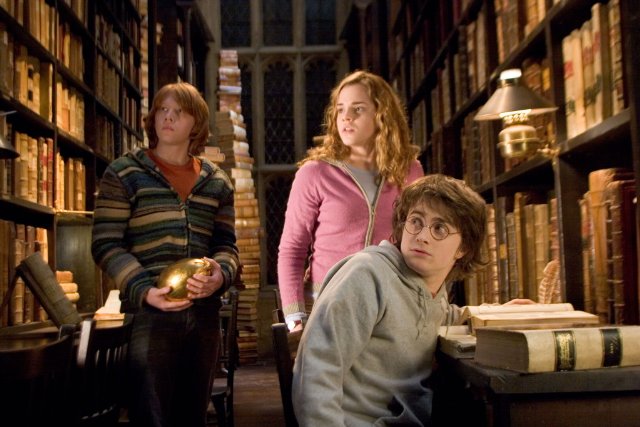
Harry Potter Hogwarts Library - Novel Conclusions - writing blog

Hogwarts Library. Courtesy of Google Images.

The omnipresent library of the Harry Potter books (and movies) also deserves a nod.  Major props go to JK Rowling for working the library into every book in the series.  Harry’s good buddy Hermione manages to find out something important from a book that moves the plot forward in every story in the series; the library is practically a character in the books.

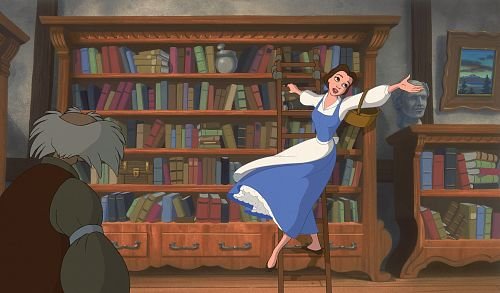
Beauty and the Beast library - Novel Conclusions - writing blog

Belle in the town book shop. Courtesy of Google Images.

There are also a couple of fantastic libraries in Disney’s Beauty and the Beast (side note: I can’t believe this movie is more than 20 years old).  As a kid, the fact that Belle adored reading made me love her more.  Who could forget the charming town book shop or the luxurious library at the Beast’s mansion?

For some real-life beautiful libraries, check out this slideshow of twelve stunning libraries.  Which libraries (real or imagined) do you think of when you think of libraries?

Description that Jumps off the Page

Posted on
The Midwife of Venice - Novel Conclusions - Description in Writing

Courtesy of bn.com

As writers, we always want to weave our description into the story just enough to make it vivid but not so much as to slow the story down.  While Dickens may have been able to get away with an entire chapter about fog in Bleak House, modern authors usually can’t get away with that and still sell books.

We frequently hear about including the senses in our writing, but we need to remember to include descriptors that have a purpose.  Does it create a mood?  Does it tell us something important about our characters?  Does it move the plot forward?  Is it important later in the story?  Maybe the image of a gorgeous orange leaf floating down to a pond captivates your imagination as an author, but does it make sense for the story you’re writing?  If your character is zipping by that leaf at 60 miles per hour on her way to a family member’s death bed, perhaps that’s not the moment for that particular image.

Roberta Rich sets the scene and the mood and drops us right in the midst of the story with the very beginning of The Midwife of Venice:

Ghetto Nuovo, Venice
1575

At midnight, the dogs, cats, and rats rule Venice.  The Ponte di Ghetto Nuovo, the bridge that leads to the ghetto, trembles under the weight of sacks of rotting vegetables, rancid fat, and vermin.  Shapeless matter, perhaps animal, floats to the surface of Rio di San Girolamo and hovers on its greasy waters.  Through the mist rising from the canal, the cries and grunts of foraging pigs echo.  Seeping refuse on the streets renders the pavement slick and the walking treacherous.

It was on such a night that the men came for Hannah.

In less than a hundred words, we know these things:

  • It is an odd time; something must be wrong.
  • Hannah lives in the super ghetto.  Literally.
  • Something creepy is about to happen.

The author gave us all of this information without telling us directly.  She uses multiple senses to show us the environment, set the eerie mood, and drop hints that something is about to happen, all at a bridge that comes up in the story again and again.  She pulls the reader in.

What have you read recently where the description jumps off the page?  What do you think makes for good description?

Related Info:

  • Check out an in-depth review of The Midwife of Venice here.  Like the reviewer, I also think it’s pretty cool that the book shows both good and bad Jews, Christians, and Muslims — it’s not just one religion versus another.
  • Agent Nathan Bransford has a great post on showing vs. telling here and how “specificity wins.”