What’s So Great About Unreliable Narrators?

Posted on
The Sixth Sense - Unreliable Narrator - Novel Conclusions - literary blog - writing tips

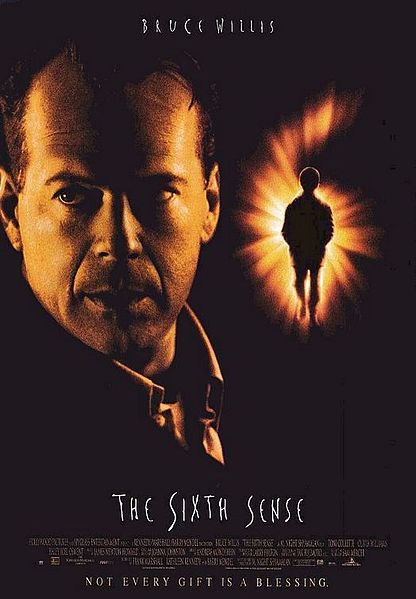
The Sixth Sense via Wikipedia

Every narrator has a perspective.  Even with novels written in third person omniscient point of view (where you as the reader know everything that’s going on, even things the main characters don’t know), there is a perspective there; the author has chosen which story to tell.  In first person and limited third person, we get to know the main character through his or her perspective – the way they views things, people, and events, the way they act.  Having a unique perspective gives the main character life.  Sometimes, this unique perspective extends so far that the main character is an unreliable narrator – they aren’t seeing what’s really happening (or, in some cases, they are omitting key information).

Why would you write a story with an unreliable narrator?  Well, let’s examine this a bit.  M. Night Shyamalan’s The Sixth Sense gives us a clear example of an unreliable narrator.  (WARNING: SPOILERS AHEAD) In this movie, we follow troubled child psychologist Dr. Malcolm Crowe (Bruce Willis’s character) as he helps a young patient, Cole, who claims he can see dead people.  Crowe is especially determined to help Cole because he failed to help a patient with similar delusions in the past.

As we get wrapped up in the story, we as an audience are completely taken by surprise – at least, I was – to find out that Crowe has been dead for the large majority of the movie and that Cole is the only one who can see him.  Crowe was an unreliable narrator because he was showing us not just a one-sided version of events but an intensely one-sided version of events.  The ending takes us by surprise because the main narrator was only showing us a very, very limited view of events.

What’s so great about unreliable narrators?

  • They allow for twists in the story that make sense (rather than twists that just feel like contrived plot devices).  When well-written, it creates that wow factor that can be so hard to come by.
  • We as writers get to fill the story with “Easter eggs.”  Think of all the incredibly cool things you can find re-watching The Sixth Sense.
  • It’s fun to get into the mind of a truly idiosyncratic character.
  • We as writers are solidly in control of the framing of the story, even more so than with a regular Joe type narrator.

A key point here is that the writing needs to be solid in order for this to work.  If the writing is tacky or shoddy, an unreliable narrator might just make the reader want to put the book down.  Of course, the writing needs to be solid for any story to work properly, but you already knew that, didn’t you?

Have you read or seen anything you enjoyed with an unreliable narrator?  What did you like about it?

Related Links:
Facebook’s Most Read Books of 2012… and the Giveaway Winner!

Posted on

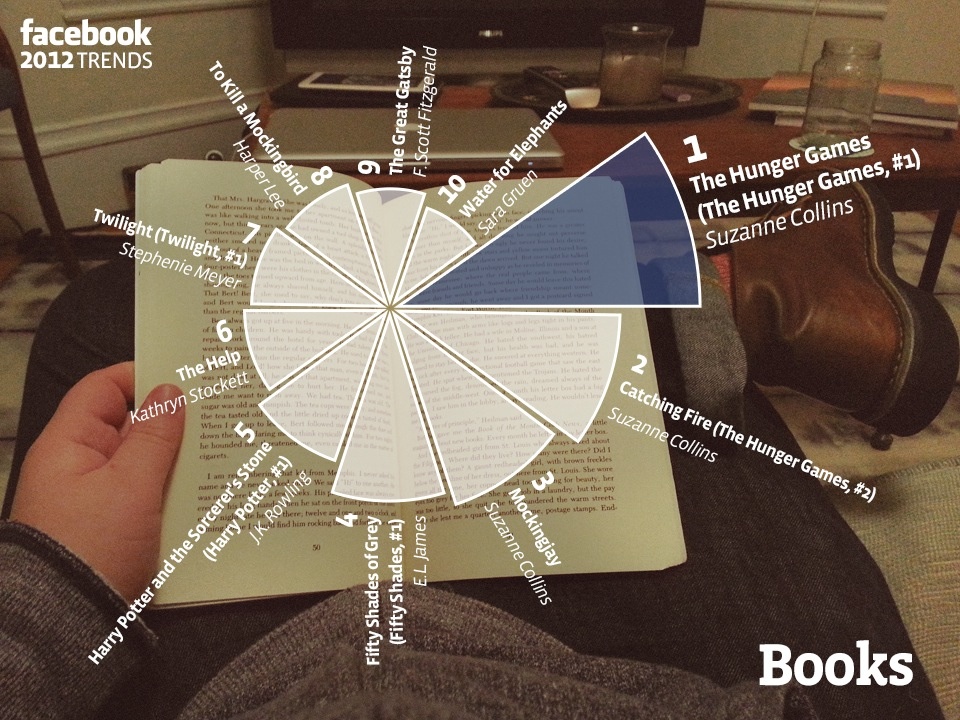
I may be a bit behind the curve on this super cool infographic (perhaps you saw this around the new year), but it was so interesting that I just had to share it.  In the past, I shared a list of the most read books in the past 50 years; below, you’ll find something slightly narrower in scope but also fascinating nonetheless, Facebook’s Most Read Books of 2012.

Most Read Books 2012 infographic - Novel Conclusions - literary blog - writing blog - Christi Gerstle

Facebook’s 2012 Most Read Books of the Year via facebookstories.com

I was most surprised by The Great Gatsby’s appearance on the list.  Although the source of this infographic doesn’t philosophize on why some books might be on the list, I wonder if Gatsby made it due to the publicity for the upcoming movie, English teachers hitting it a little more than normal, or just that the book is one of those that sticks.

Giveaway Winner

DRUMROLL…

Random.org gave me the gorgeously round number 575.  This makes Tracy Cembor, with the number 500, the winner of Cassandra Clare’s Clockwork Princess!  Congrats Tracy!  You can check out her blog over at tracycembor.com.

Should I Really Read the Classics? AND a Giveaway

Posted on
MacBeth apparition - why read classic literature - enjoying the classics - Novel Conclusions - Christi Gerstle - literary blog - writing tips

MacBeth: the Apparition of the Kings by Théodore Chassériau, via Wikimedia Commons

There comes a certain point in your time as a reader, at least for more serious readers, when you decide you should read some classics.  When I was a kid, I wanted to read the classics because it was the smart thing to do (and smart was cool, in my lexicon as a middle schooler – although that lexicon also involved lots of ugly baggy 90s shirts, but whatevs…).  Other people read the classics because they’re curious or because someone recommended a certain book or even just because they have to for school.

When I was at the book signing week before last, I was talking with a couple teenage girls there, and they said they hadn’t really read any classics, that they really preferred girly YA books.  And there’s nothing wrong with girly YA books!  I love me some adventurous, booty-kicking YA heroines.  So why read classics?

For a few reasons:

  1. You can more fully understand the fun books you’ve been reading this whole time.  How is this?  Well, most authors are very well-read and tend to incorporate that into their work.  Take JK Rowling as an example – the Harry Potter series is filled with allusions to works like the Iliad, MacBeth, the Canterbury Tales, and the Bible.  The characters even have a discussion about the meaning of I Corinthians 15:26 (“And the last enemy that shall be destroyed is death”), among other things, in Harry Potter and the Deathly Hallows.  Other examples of this are the frequent allusions to Tennyson’s poetry and Dickens’ A Tale of Two Cities in Cassandra Clare’s The Infernal Devices series and Suzanne Collins’s abundance of allusions to the Roman Empire and to Shakespeare’s Julius Caesar in The Hunger Games trilogy.
  2. It makes you part of a unique group. Not everybody reads classics.  You get to be part of the “in jokes,” so to speak, in the literature and book publishing arena whenever people allude to the books you’ve read (and no worries – no one has ready every classical book out there).
  3. It gives you a broader perspective of the world in general.  When could a broader perspective ever be truly bad?  Broader perspectives lead to things like the abolition of slavery and equal rights for women.
  4. It’s fun.  Some classics are just as fun to read as books written in the current era.  See below for a short list.

Easier Classics
A small sampling:

  • Pride and Prejudice by Jane Austen – basically a romantic comedy.  Who doesn’t love Elizabeth and Darcy?
  • A Farewell to Arms by Ernest Hemingway – love in wartime.  It’s a little sad, though, so advance warning.
  • Candide by Voltaire – a French comedy with adventure, love, pirates, and Turkish chain gangs.
  • The Importance of Being Earnest by Oliver Wilde – a mistaken identity comedy.
  • The School for Scandal by Richard Brinsley Sheridan – a hilariously gossipy comedy, with character names like Lady Sneerwell, Sir Backbite, and Snake.
  • Much Ado About Nothing by William Shakespeare – get the edition that has explanations on every other page, makes all those Shakespearean insults more understandable (and therefore funnier).
  • Brave New World by Aldous Huxley – dystopian fiction from long before The Hunger Games.

NOW FOR THE GIVEAWAY

As promised last week…  If you’d like to be entered into the giveaway for a signed copy of Cassandra Clare’s Clockwork Princess, here’s what you do:

  1. You need to already live in the US or Canada (sorry, international folks, postage is expensive for huge hardcovers).
  2. Comment below with a number between 1 and 1000 by next Sunday, April 7, at 9 pm Pacific Time.
  3. In your comment, if you like, answer this question: what’s your favorite classic book and why?  And if you don’t have a favorite classic, what’s one you’d like to read?

Related Links:

Cassandra Clare’s Book Signing

Posted on
Clockwork Princess - Infernal Devices - Cassandra Clare - Novel Conclusions - Christi Gerstle - City of Bones - Lily Collins

Clockwork Princess Cover via CassandraClare.com

Have you ever been to a book signing?  I hadn’t been to a book signing in years, and I heard about Cassandra Clare’s Clockwork Princess book signing at a Barnes & Noble in central LA this past week and thought it would be a fun little literary event.  It was fun but definitely not little.  The crowd and staff treated Cassandra Clare like a rock star.  I would guesstimate that 1200 people waited in line to see Ms. Clare; it was some craziness.

Cassandra Clare is the author behind The Mortal Instruments: City of Bones series, soon to be a movie starring Lily Collins (I also found out that the always hilarious Robert Sheehan of Misfits plays sidekick Simon, making the movie that much more awesome).  Lily Collins and director Howard Zwart were at Barnes and Noble for the question and answer session before the signing, and authors Maureen Johnson and Sarah Rees Brennan joined Cassandra Clare for the signing.  What stuck out most to me during the Q&A was Ms. Clare’s explanation of how, in City of Bones, she “was going for a confluence of the real and the magical,” the idea that coffee shops and warlocks could co-exist on the same street.

Everyone I met in the crowd and in line at the signing was super friendly and cheerful (we YA readers must be a good bunch!).  One woman had driven down from Visalia (that’s 3 hours without traffic!  On a Thursday!) to see Cassandra Clare.  I also met the bloggers from Sparkles and Lightning and Tackling Tinseltown – check out their fun blogs.

What I Learned:

  1. Either plan to swing by the book shop early in the morning to get a wristband closer to the front of the line, or make friends with some employees.  We didn’t get our books signed until 10:30pm at a 7pm signing.  Yes, that’s a little intense for a school night.
  2. Buy/bring books by the mid-list authors that came with the front list author (in this case, the authors I’m referring to are Maureen Johnson and Sarah Rees Brennan).  I wish I’d chit chatted with them a bit more about their books and their experiences as YA authors as they were much more available than Ms. Clare, who was busy signing approximately 4 books for each person who came up.  Maureen Johnson and Sarah Rees Brennan were super friendly, making jokes and chatting up the crowd as we made our way to the front of the line.
  3. Ask more readers in line if they have blogs (I love finding local reading/writing-related blogs!).

Since I got two copies of Clockwork Princess signed, DRUMROLL… there will be a giveaway coming up this week!  Keep an eye out on the blog this upcoming week for a giveaway of a signed copy of Cassandra Clare’s Clockwork Princess.

Have you ever been to a book signing?  What was it like?  Do you have advice for signings?

Related Content:

Random Plot Generators or Another Way to Stave Off Writer’s Block

Posted on
Clint Eastwood - Random Plot Generator - Novel Conclusions - writing blog - writing tips - Christi Gerstle - plot scenario generator

Every Which Way But Loose via Google Images

Today, let’s take a moment to appreciate the awesomeness and hilarity of random plot generators.  Picture this:  You stare at the blank page, and the blank page stares right back atcha.  After some time of this, you finally give in to work with some writing prompts.  However, you won’t work with just any writing prompts, you will use the fantastic random plot generators that pop up frequently in out of the way spots on the interwebs.

Random plot generators often get a bad rap for throwing out crazy, unrealistic plot ideas, but they can definitely help stave off writer’s block.  Although I can’t find the original source (sorry, y’all, Google let me down on this one) for matching this movie to this plot generator, Wikipedia tells us about an example from a retired version of The Official Movie Plot Generator, which has three vertical boxes, the first of which identifies a specific type of protagonist:

“A trucker who doesn’t play by the rules.” The middle box specifies a specific action on the part of the protagonist– “bareknuckle fights for money.” The bottom box specifies a specific type of antagonist, “accompanied by a mischievous orangutan.” By piecing these three elements together, the user obtains the odd sentence, “A trucker who doesn’t play by the rules bareknuckle fights for money, accompanied by a mischievous orangutan.” This plot sounds absurd, and it is — but it is also the plot of a movie starring Clint Eastwood — Every Which Way but Loose.

There are not only some really fun random plot generators out there in every genre you can imagine (such as this plot scenario generator, this genre plot generator, and this more creatively designed science fiction plot generator); character quirk generators exist, too.  Check out a fun example of character quirks from the character generator at Archetype Writing:

Your character is female.
One of your character’s cardinal traits is charisma.
The character’s greatest weakness is a fear of snakes.
The character’s most prized possession is a coin from the Roman Empire.

What do you all think of random plot generators?  Are they an amusing waste of time?  Or can they prompt actual, helpful ideas?

Punching Up That Theme

Posted on
Holes - Louis Sachar - YA Books - theme - writing tips - Novel Conclusions - Christi Gerstle

Louis Sachar’s Holes via Google Images

So you’ve gotten past the first draft, perhaps past the fifth draft, and you’re starting to hone in on bigger picture ideas like theme.  But what are the themes in your story?  And how do you make sure they don’t come across as forced morals?

Since I have trouble with this in my writing, I thought we could examine how the experts have done it.  In this case, those experts are JK Rowling and Louis Sachar.  Both Harry Potter and the Sorcerer’s Stone and Holes explore the theme of the importance of true friendship, and both of these books do it in a way that is real, warm, and absorbing, despite some crazy circumstances.

In Louis Sachar’s Holes, our “cursed” protagonist Stanley Yelnats has gotten himself into quite a pickle.  Accused of a crime he didn’t commit, he’s sent to a juvenile detention camp in the middle of the desert with a bunch of much less innocent delinquents.  Stanley makes friends with another outcast, a kid named Zero.  Inevitably, they get into some much more serious trouble (I won’t spoil it too much here), and they end up saving each other’s lives.  For the first time in as long as he can remember, Stanley has a real friend.  When he and Zero are still mired in craziness, Stanley is the happiest he’s ever been because he has someone he can depend on:

As Stanley stared at the glittering night sky, he thought there was no place he would rather be.  He was glad Zero put the shoes on the parked car.  He was glad they fell from the overpass and hit him on the head.

With some fantastic showing instead of telling, Sachar explores this theme of the importance of true friendship without getting preachy.  We know, through Sachar’s spare, straightforward storytelling, that Stanley and Zero needed each other.  The theme is an integral part of the plot, and it gives the story depth.

Rowling explores this same theme in Harry Potter and the Sorcerer’s Stone (or Philosopher’s Stone), the first book in the series.  She knew (though we as readers did not) that the friendship between Harry, Ron, and Hermione had to hold strong for an entire series and had to ring true.

Harry winning their friendship.  JK Rowling was so adamant about the importance of this scene that she had to convince her editor it was worth keeping.  On her old website, she explained, “Hermione is so very annoying in the early part of Philosopher’s Stone that I really felt it needed something (literally) huge to bring her together with Harry and Ron.”

What can we learn from these expert authors?  What questions can we ask ourselves while revising?

  • Which themes exist already in my story?
  • Which of these themes is most integral to my plot?
  • What can I do to make this idea clearer?

What do you all think?  How do you approach theme when writing?

Pixar’s 22 Rules for Phenomenal Storytelling

Posted on

It can be very hard to determine what makes a story “good.”  What makes one story good and one story bad and one story just mediocre?  Pixar thinks they may have it figured out.

What is it that makes UpFinding Nemo, and WALL-E (among others) pretty amazing?  Pixar has a few rules for phenomenal storytelling.  I stumbled across this infographic over at pbjpublishing.com, and I just had to share.

My favorite might be #14.  Which rule is your favorite?  Do you have any rules that you might add?

Storytelling infographic - pixar - novel conclusions - Christi Gerstle - good writing - writing tips

Pixar’s 22 Rules for Phenomenal Storytelling via pbjpublishing.com

More Storytelling and Infographic Posts:

The Humor(ist) in Equal Rights

Posted on
Erma Bombeck - Novel Conclusions - Christi Gerstle - equal rights act

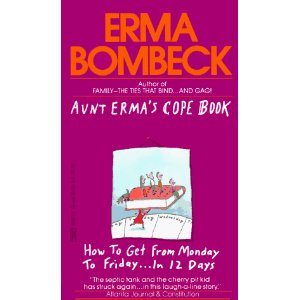
Aunt Erma’s Cope Book courtesy of Amazon

“When I stand before God at the end of my life, I would hope that I would not have a single bit of talent left, and could say, ‘I used everything you gave me.'” – Erma Bombeck

I celebrated my 30th birthday this week (eek! A whole new decade!), and I thought this was a good opportunity to recognize a pretty fantastic journalist and author who also has a February birthday, a woman who made a difference for authors everywhere, especially female authors.  This woman is Erma Bombeck.

I I grew up reading Bombeck’s hilarious schtick on family life and life in general.  My mom had a collection of Bombeck’s books, and I remember pulling them off the shelves at a fairly young age and reading them out loud to my mom while she made dinner.  Bombeck had an optimistic and offbeat way of looking at everything and finding humor even in tragic circumstances.  Bombeck was also part of the Presidential Advisory Committee for Women that supported the Equal Rights Act in the 1970s.  As a result of this involvement, many of Bombeck’s books were pulled from shelves of local bookstores.

One of my favorite quotes of hers is the one above.  I hope we can all be reminded that every day is a gift of time to use our talent productively.  I now have a whole new decade to use productively (still can’t believe I’m now a thirty-something!  Egad!).

Have you ever read any of Erma Bombeck’s books?  And do you have any advice for newly minted 30-year-olds?

P.S.  Speaking of using our talent productively, there’s a fantastic/evil app for that, Write or Die.

DRM or Do I Really Own My E-Books?

Posted on
e-books DRM - digital resource management - publishing DRM - Novel Conclusions blog - e-book licensing - censorship

via Google Images

Yes, it’s easy to download e-books lickety-split, and yes, they’re great to read on trains, planes, and big ol’ public transit (although I still get car sick reading anything in the car).  However, do we really own our e-books?  And what are the implications of owning or not owning said e-books?

For some of y’all, this info is old hat.  You already know that when you buy a new book from Amazon (unless it’s in the public domain), that you’re essentially renting the book.  Why is this?  The reason for this is DRM (Digital Rights Management).  It’s certainly more difficult to lend your bestie your whole e-collection of Janet Evanovich or JK Rowling without actually lending her the reading device itself.

The eerie censorship quirks of DRM became a bit more common knowledge with the Orwell debacle in 2009 when Amazon remotely erased from many Kindles copies of Orwell’s 1984 and Animal Farm (highly ironic that 1984 was erased, don’t you think?).  Back in October, Norwegian IT Consultant Linn Nygaard had her Kindle account randomly deleted by Amazon (with all 30-something books attached to it) for reasons unknown to her.  She tried multiple times to get her account reinstated, and Amazon would not reinstate her account and would not tell her why.

This is not just the case with the Kindle.  Other issues can happen with the Nook and other proprietary e-readers.  Barnes and Noble can withhold access to your e-books if your credit card on file is expired even though you have already paid for your books.

There are also some pretty cool things to come from this Big-Brother-esque e-reader technology, like whether people read a book straight through, how long it takes them, and if they finish it at all.  For example, the WSJ tells us, “It takes the average reader just seven hours” to finish Mockingjay, the third Hunger Games book.  As literati Nathan Bransford put it on his blog back in November, “Your E-Reader is Watching You.”

There are lots of pros and cons here.  What do you all think?  Does DRM make you want to buy hard copy books?  Or is it just one of those things we have to deal with since e-books are so incredibly handy?  Or do you have a different take altogether?

Related Articles:

The Art of Naming Your Characters

Posted on
Katniss - Hunger Games - Novel Conclusions - Writing Blog - Christi Gerstle

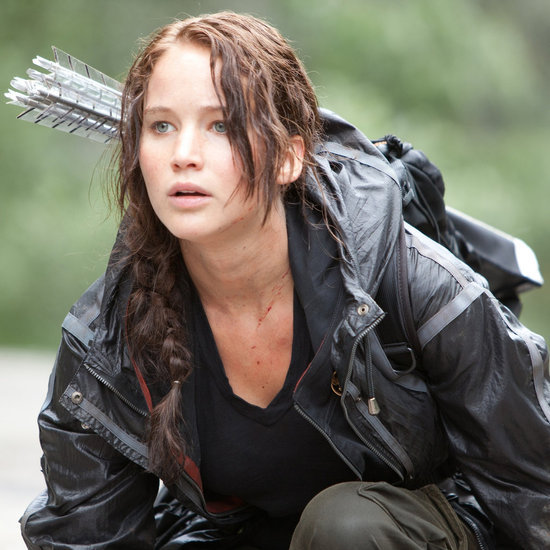
Katniss via Google Images

What are the most important things to remember when naming your characters?

Recently, io9 talked about character names that should be banned, and and it got me thinking about naming characters in general.  I don’t necessarily agree that you should never use the name Katherine (as the author suggests, among other things), but I do think that there are important things that need to be taken into consideration so as not to distract the reader from the story.  Whenever the reader gets pulled out of the story by something jarring (like an ill-fitting character name), they are more likely to put that book down.  And the reader putting your book down is bad, right?  I thought so, too.

Every writer has their own opinion about naming characters in their stories, but I personally subscribe to the screenwriter method.  This method is pretty clearly outlined in William M. Akers’ Your Screenplay Sucks: 100 ways to make it great (crazy title, awesome book – I highly recommend it for anyone writing any type of fiction).  One of the main tenets of this method is trying your best to not give characters names that start with the same letter or rhyme.  This can be easily accomplished by listing the letters A to Z and not using more than one name for each letter (and if you have more than 26 main characters, that’s a whole different issue).

You can also go a little further and give characters names that mean something, that say something about their character.  Dickens and Shakespeare were big on this.  In more recent years, JK Rowling gave quite a few of her Harry Potter characters Latinate names that hinted something (for example, Dumbledore comes from the Latin word for “bumblebee”), and many of her characters were named after stars/characters from mythology (Sirius, Bellatrix, Regulus, Merope, etc.).  Frequently her nods at mythology related directly to the character, as in the case of Remus Lupin being a werewolf (Remus, in mythology, was one of the twins who founded Rome and was raised by a wolf).  You’ve got to be careful with this, though, or you might fall into accidental parody territory, which would generally be bad times.

One thing that really bugs me is popular names that are spelled in crazy irritating ways, like Kaiyleigh, Ashli, Jaydenn, Jessikah (aaahhh, I can’t even write any more of these horrible names), unless of course your characters actually live in a trailer park.  If you must name your character a popular current name, for goodness sake, please spell it in a way that doesn’t burn your readers’ retinas (Kailey, Ashley, Jaden, Jessica, etc.).

Some science fiction and fantasy books can get away with unusual names, like Game of Thrones or Hunger Games, but even then, it’s helpful to keep the names as pronounceable as possible.  In Game of Thrones, we can all pronounce Cersei, Sansa, and Tyrion even though we’ve never seen those names before.  In Hunger Games, Katniss, Peeta, and Prim are all names that we can pronounce.  Capiche?

What tips and tricks do you use when naming characters?  Or do you just use names that “feel right”?